

Managing Anxiety During Life Transitions
Practical techniques to steady yourself when everything feels uncertain. Includes breathing exercises, grounding strategies, and when to seek professional support.


When Everything Changes at Once
Life after 45 brings real shifts. A career pivot. Health concerns. Relationships evolving. Aging parents. It's not that you're weak or unprepared — it's that change itself carries weight. Anxiety during transitions is completely normal. It's your nervous system's way of saying "this matters."
The thing is, you don't have to white-knuckle your way through it. There are proven techniques that actually work. Not complicated meditation retreats or expensive therapy (though those have their place). We're talking practical tools you can use today — breathing exercises, grounding strategies, and honest conversations about when you need more support.
What You'll Learn
- Why anxiety spikes during life transitions (and that it's not a failure)
- Four breathing techniques you can use anywhere, anytime
- Grounding strategies for when panic feels close
- How to recognize when professional support matters
Understanding Transition Anxiety
Your body doesn't distinguish between a tiger attack and a job change. Both trigger the same ancient survival response. Your heart rate climbs. Breathing becomes shallow. Muscles tense. It's designed to keep you alive — but it's absolutely exhausting when you're trying to navigate a spreadsheet or have a conversation with a partner.
Most people experience peak anxiety in the first 4-6 weeks of a major transition. That's normal. Your nervous system is recalibrating. You're processing loss (even positive changes involve loss) and uncertainty. The timeline varies — some people settle faster, others need longer. Neither is wrong.
What matters is recognizing the pattern. Anxiety during transitions isn't a sign you're making the wrong choice. It's often a sign you care about the outcome and you're paying attention to the stakes involved.

Important Note
This article provides educational information about managing anxiety during life transitions. It's not medical advice, and it's not a substitute for working with a qualified mental health professional. If you're experiencing severe anxiety, panic attacks, or persistent feelings of hopelessness, please reach out to your GP or contact a mental health service. In Ireland, you can contact Pieta House (1800 247 247) or Samaritans (116 123) for free, confidential support.

Four Breathing Techniques That Work
Breathing is your nervous system's remote control. When you're anxious, your breathing becomes shallow and rapid — which actually makes anxiety worse. Intentional breathing reverses that pattern. You're telling your body "we're safe now." Here's what works.
1
Box Breathing (4-4-4-4)
Inhale for 4 counts. Hold for 4. Exhale for 4. Hold for 4. Repeat 5 times. This works because it's simple and rhythmic. Your brain needs rhythm when it's in panic mode. You can do this anywhere — at your desk, in the car, waiting in the doctor's surgery.
2
Extended Exhale (4-6)
Inhale for 4 counts. Exhale for 6. The longer exhale activates your parasympathetic nervous system — that's your body's brake pedal. This is particularly good when you're feeling that tight-chest anxiety. Try 3-4 rounds and notice what shifts.
3
Tactical Breathing (used by military)
Inhale 4, hold 4, exhale 4, hold 4. Like box breathing but with clearer labels. Some people find naming each phase helps them focus. Military personnel use this because it's proven effective under extreme stress. If it works for high-pressure situations, it'll work for your anxiety spike.
4
4-7-8 Breathing (for sleep)
Inhale for 4, hold for 7, exhale for 8. This one's specifically good when anxiety is stealing your sleep. The extended hold and exhale signal deep relaxation. Do 4 rounds before bed. You might feel drowsy within minutes.
Grounding: Anchoring Yourself to the Present
When anxiety hijacks your mind, you're usually catastrophizing about the future. "What if I fail?" "What if nobody likes me in this new role?" Grounding pulls you back to right now, where you're actually safe. It's not magical. It's neuroscience. Your brain can't be fully in panic mode and fully present at the same time.
The 5-4-3-2-1 technique is the most reliable. Name five things you can see (not judge them, just notice). Four things you can touch. Three things you can hear. Two things you can smell. One thing you can taste. This engages all your senses and forces your brain into observation mode instead of threat-detection mode.
Other grounding options: Hold ice cubes and notice the temperature shift. Splash cold water on your face. Press your feet firmly into the ground. Describe a room in detail as if you're explaining it to someone who's never been there. The point isn't which technique — it's interrupting the anxiety spiral by shifting your attention deliberately.

When to Seek Professional Support
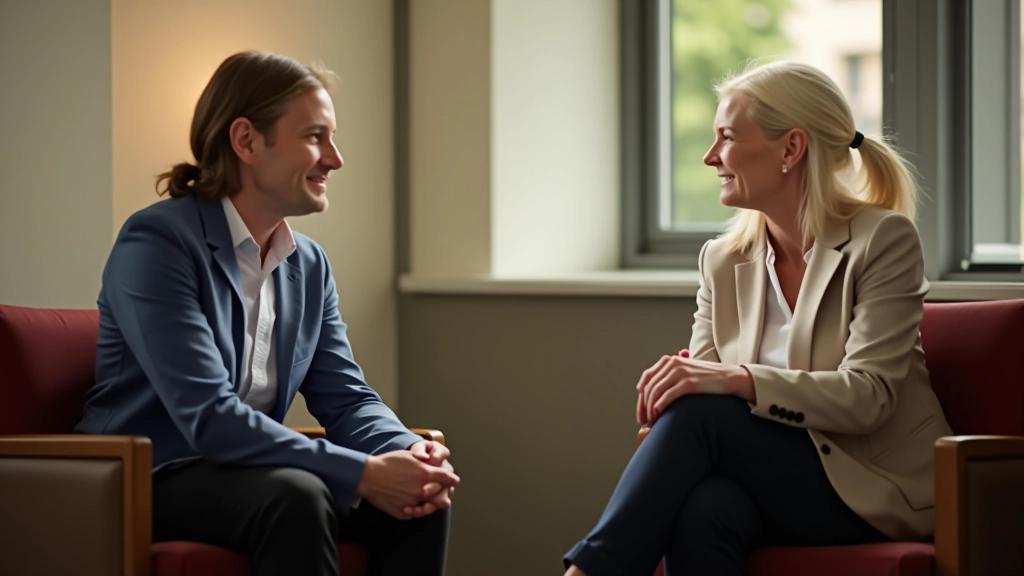
These tools work. But sometimes they're not enough. And that's completely okay. Professional support isn't a failure — it's a smart choice.
Consider reaching out to a therapist or counselor if: Your anxiety is preventing you from eating or sleeping normally. You're avoiding situations that matter to you because of panic. You've been feeling this way for more than 8 weeks. You're having thoughts of harming yourself. You're turning to alcohol or other substances to manage the anxiety.
In Ireland, your GP is the starting point. They can refer you to mental health services or recommend therapists. You've also got private options — many therapists in Dublin and across Ireland specialize in life transitions and anxiety. Organizations like Aware (aware.ie) and Mind offer free information and resources.
The breathing exercises and grounding techniques aren't "lesser" tools because you're also seeing someone professionally. They're complementary. You're building your toolkit so you've got options whatever the moment demands.
Moving Through Anxiety, Not Around It
Anxiety during life transitions is your nervous system working exactly as it's supposed to. Your job isn't to eliminate it — it's to manage it so it doesn't manage you. The breathing techniques here are immediate. You can start today. Grounding works within minutes. And knowing when professional support makes sense? That's wisdom, not weakness.
Your life is changing. That's real. The anxiety is real. And your ability to move through it, to adjust your nervous system, to reach out for help when needed — that's real too. You're not starting from zero. You're starting with tools that actually work.